Field Notes
Reading the weather from the kitchen window.
The forecast covers an area sixty kilometres wide. The window covers the one you are standing in.
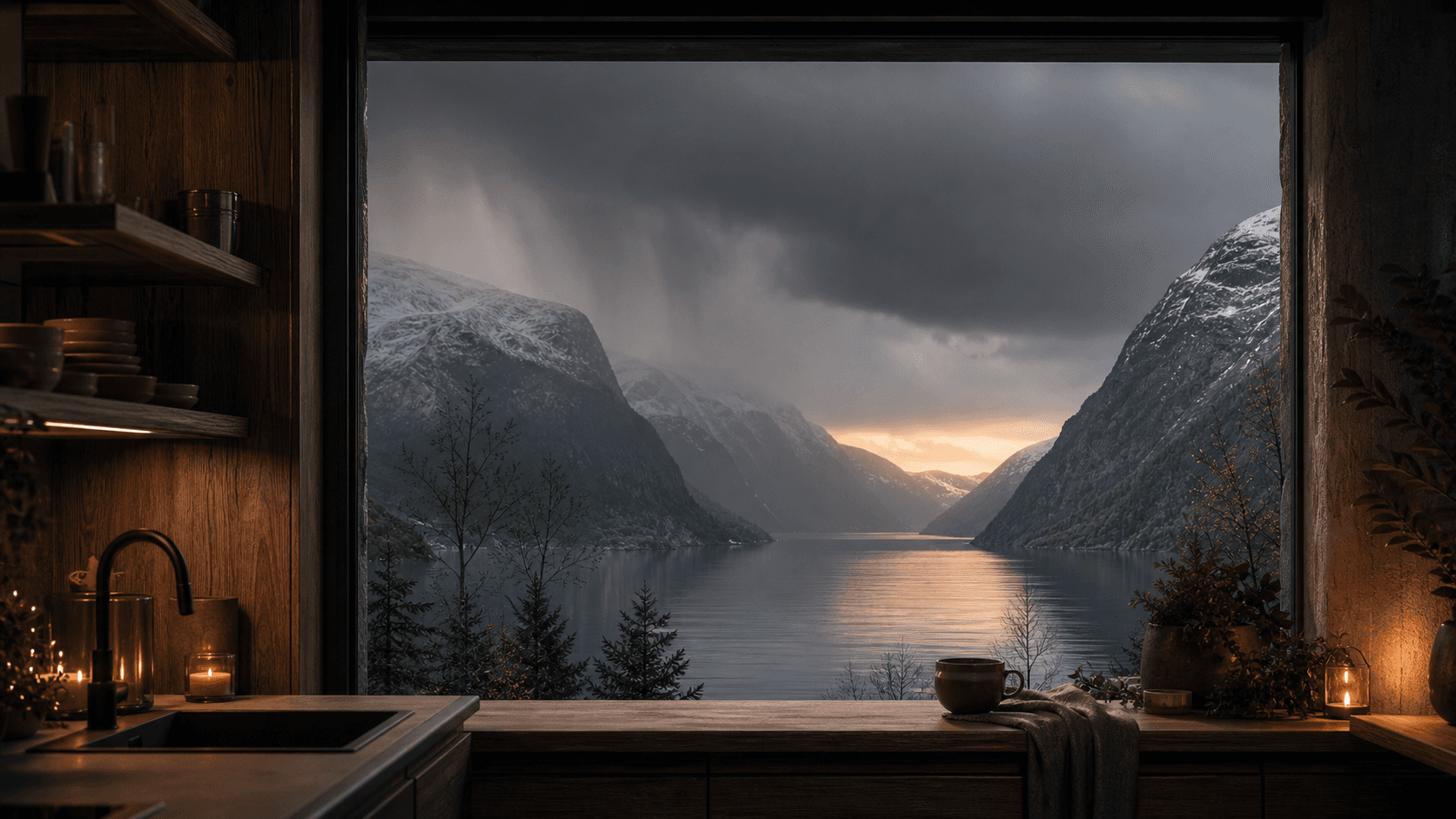
Every forecast for this coast is an average taken across mountains, open sea and a dozen fjords that each do their own thing. It is not wrong, exactly. It is just describing somewhere slightly to the left of where you are.
Three things worth watching
The water first. When the fjord goes from ruffled to smooth in the space of an hour, the wind has not dropped — it has turned, and it will come back from the other side harder. Locals stop what they are doing and bring things inside when the water flattens.
Then the far ridge. If you cannot see the notch on the skyline to the south-west, rain is already falling twenty minutes away and moving up the water towards you. If the notch is sharp enough to count the trees, you have a few hours.
And the light. On a clear winter afternoon the light goes from white to a hard orange in a matter of minutes, and that orange means the cloud has cleared to the west and the temperature will fall through the evening. It is also, not coincidentally, the best hour of the day to be outside.
What to do with any of it
Mostly: go now. The single most common regret we hear is from people who waited for better weather on a day that had one good hour in it. There is a printed map in the hall with the short walks marked, the ones worth doing in an hour of uncertain light.

ABOUT THE HOST
Marta Lindqvist
Marta and Anders look after Skandic themselves — the house, the woodpile, and every message before you arrive.


